


Professional Storage Moving Services
Putting belongings into storage or retrieving them later involves more than dropping boxes at a facility. Furniture must be prepared for transport, the storage unit needs to be accessible, and loading arrangements have to work at both locations. City Moves provides storage moving services for customers transporting household belongings to or from a self-storage facility they have arranged independently.
Storage moves can be part of a home sale, renovation, downsizing project, delayed possession date, or a gradual relocation. We can discuss the items being moved, your chosen facility, unit location, access hours, loading bay, elevators, and travel between addresses before planning the transport. City Moves provides moving assistance; storage unit rental, security, insurance, and facility operations remain matters to arrange and confirm with the storage provider.
How Our Storage Moving Service Works
Moving into or out of storage works best when the transport plan matches the facility’s practical rules. Share the unit size and location, your inventory, and any restrictions before confirming your move.
- Confirm your pickup address, storage facility, moving date, and item inventory.
- Check facility hours, gate access, loading zones, elevators, and unit level.
- Prepare furniture and clearly label boxes for handling and future retrieval.
- Load, secure, and transport the agreed belongings between the two locations.
- Unload at the unit or destination and place items according to the agreed plan.
When leaving belongings in storage, consider how frequently you will need particular boxes or furniture. Ask the facility about permitted access, aisle clearance, restrictions on stored items, and whether you need your own lock. When retrieving items, make sure the unit can be opened, the inventory is accessible, and your receiving property is ready before the moving crew arrives. The storage facility remains responsible for its own policies and any separately purchased storage arrangement.
Transport Planned Around Storage Access
A ground-level unit with drive-up access differs from an indoor unit reached through corridors and freight elevators. We review the facility’s access arrangements and carrying distance so the plan reflects the actual loading work.
Organized Furniture and Box Handling
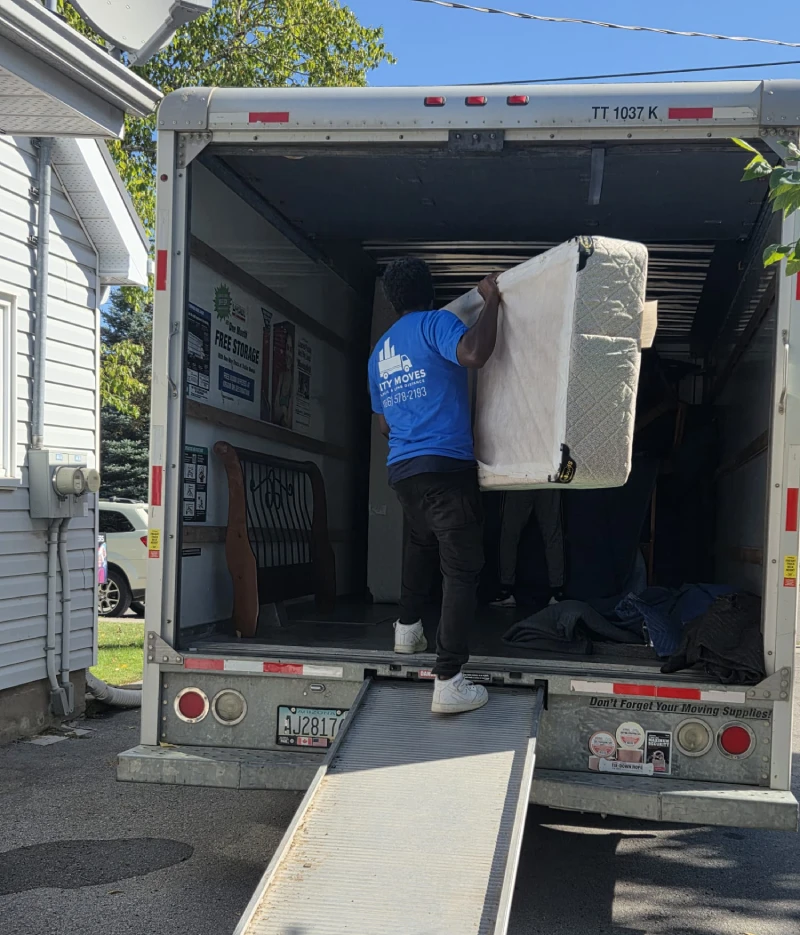
Storage moves often involve mixed inventories, from packed cartons to mattresses, tables, and cabinets. Identifying bulky and fragile items early makes it easier to plan loading, transport, and placement without treating every box as interchangeable.
Flexible Move-In and Move-Out Planning
Storage may bridge a gap between properties, support a renovation, or help with downsizing. We can discuss transportation to a facility, pickup from an existing unit, or a move between storage and a residence, subject to service availability.
GET A FREE QUOTE
Preparing for a Storage Move
Moving belongings into a self-storage unit. Before the scheduled date, confirm that the rental agreement is active and that your unit is large enough for the inventory you want to store. Ask the facility about driveway or loading-dock access, gate codes, unit level, elevator use, and permitted hours. Having this information in advance helps avoid a crew arriving while the facility is inaccessible.
Retrieving furniture and boxes from storage. If you are moving into a new house or apartment, check which items will come out of storage and where they need to go. An accurate list is useful when some boxes are buried behind furniture or when you are only collecting part of the stored inventory. Confirm access to the unit and availability of any loading equipment provided by the facility.
Preparing furniture for a period in storage. Empty furniture drawers, secure removable components, and discuss safe ways to protect items during transportation. Upholstered pieces and mattresses may need appropriate coverings, and wooden furniture should be stored according to facility guidance. Where available, our packing services can help prepare selected belongings for the move; they do not replace the storage operator’s guidance about long-term preservation.
Using storage during a home transition. A closing-date gap, renovation, staging project, or smaller new residence can make temporary storage useful. Decide which belongings should travel directly to the new home and which should be transported to the unit. If a complete household relocation is also needed, review our house moving services and residential moving services to clarify the overall scope.
Planning access and placement in the storage unit. Consider keeping frequently needed boxes close to the front and leaving safe access where required by the facility. Heavy items should be positioned appropriately, and fragile possessions should not be placed under unstable loads. Tell us whether your unit has long corridors, limited elevator hours, a low doorway, or a long walk from the parking area.
Transporting selected items rather than a full household. Storage moves sometimes involve one room, a few large items, or belongings collected in stages. Provide a precise item list and measurements for oversized pieces, especially where a storage unit has height or door-clearance restrictions. See our small moving services for limited inventories or furniture moving services for furniture-focused requests.
Understanding storage moving costs and responsibilities. Transportation charges depend on the inventory, distance, crew and equipment requirements, loading and carrying distances, stairs or elevators, and the time required. Storage rent, deposits, access fees, insurance, and storage-related restrictions are separate matters to confirm with the facility. Share both addresses, your unit details, and the intended services when you request a free moving quote so the estimate clearly distinguishes moving work from storage rental.